Work orders
Plan, assign and document the work your team performs.
A work order keeps the task, assignee, status and supporting information together. Link approved instructions and record findings so the next review has useful history.
Workspace access. Pages and actions depend on your role and the modules enabled for your workspace. This guide describes CW release/1.0.1; your administrator can confirm the options available to your team.
Get started
Open Maintenance → Work orders. Review the equipment and scope, assign the work and use the available scheduling fields. Update the status as work proceeds and record what happened before completion.
Watch the walkthrough
Follow the actions in Connected Workers, then use the chapter sections in the progress bar to revisit a step. English subtitles are on by default; choose Hebrew in the captions settings.
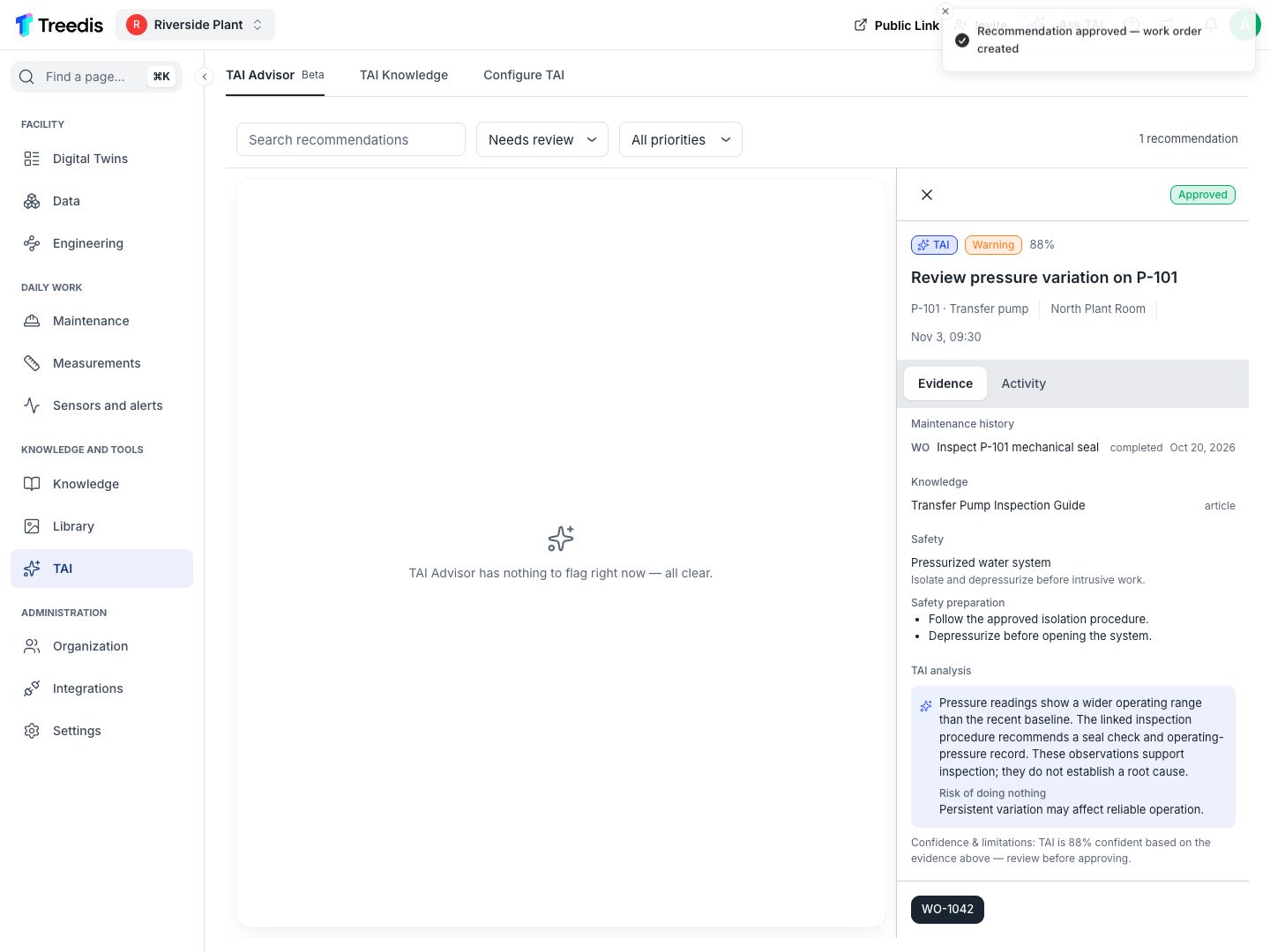
The resulting work stays connected to the reviewed equipment context. Open the image to view the controls at full size.
The user flow
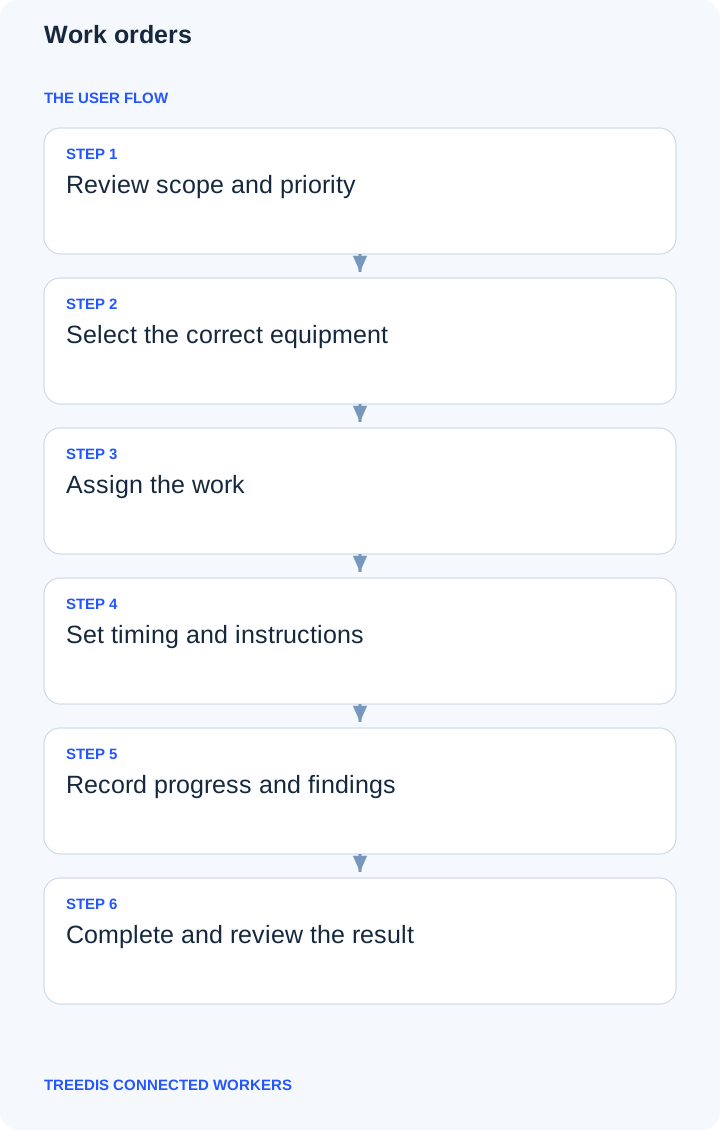
- Review scope and priority.
- Select the correct equipment.
- Assign the work.
- Set timing and instructions.
- Record progress and findings.
- Complete and review the result.
How the information moves
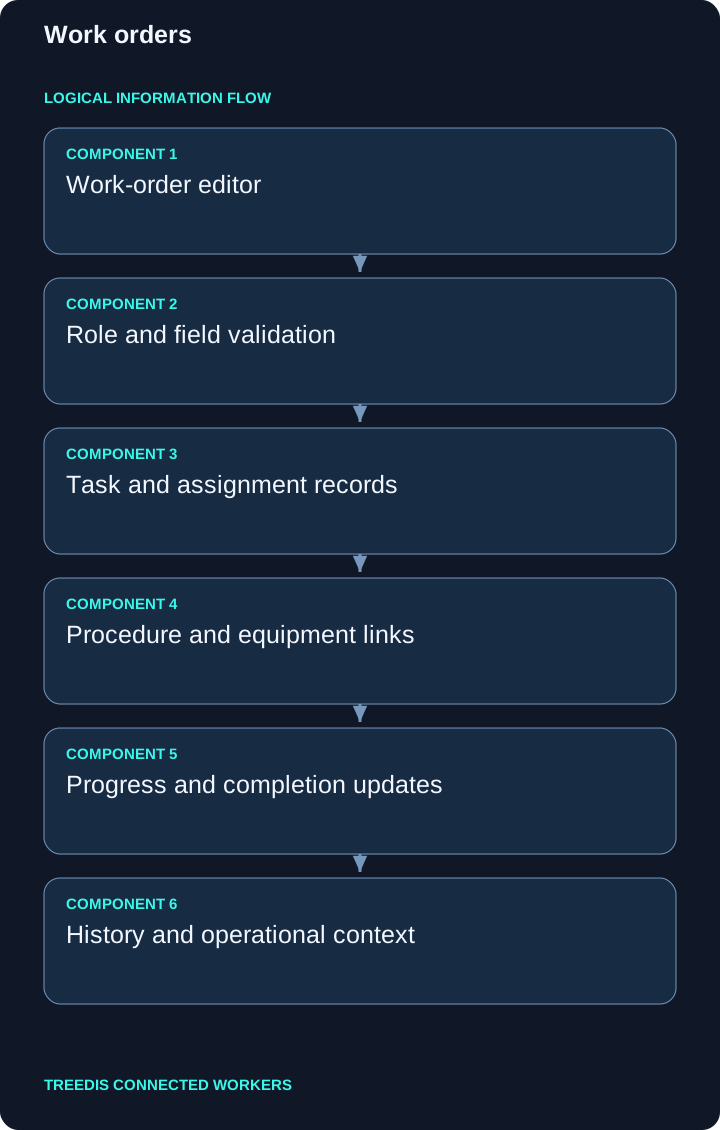
| Stage | Responsibility |
|---|---|
| 1 | Work-order editor |
| 2 | Role and field validation |
| 3 | Task and assignment records |
| 4 | Procedure and equipment links |
| 5 | Progress and completion updates |
| 6 | History and operational context |
The diagram describes the logical path through the application. Saved records retain their workspace and relationships. Supported background processing and external synchronization can complete after the initial save.
Tips for better data and TAI context
- Write a clear task and completion check.
- Link approved procedures and relevant files.
- Include measured results and any remaining issue.
Consistent equipment codes, precise location links and readable approved files help TAI retrieve the intended context. A saved record does not mean every attached file has finished indexing. See background indexing for the preparation process.
Check the result
Open the saved record or configuration again. Check its location, equipment links, status and visibility for the intended role. If information is missing, check scope and permissions before adding a duplicate.
Related guides
Connected Workers overview · TAI · Knowledge and search
For help with availability or setup, contact your workspace administrator or support@treedis.com.