Engineering: Diagrams and Relationships
Connect visual engineering information to the equipment it describes.
Diagrams provide a visual reference; relationships show how records connect. A matching label is useful evidence, but confirm its context when identifiers repeat across sites or systems.
Workspace access. Pages and actions depend on your role and the modules enabled for your workspace. This guide describes CW release/1.0.1; your administrator can confirm the options available to your team.
Get started
Open Engineering and choose Diagrams or Relationships. Use the intended diagram and asset context. Review highlighted labels and related records, then confirm supported connections.
Watch the walkthrough
Follow the actions in Connected Workers, then use the chapter sections in the progress bar to revisit a step. English subtitles are on by default; choose Hebrew in the captions settings.
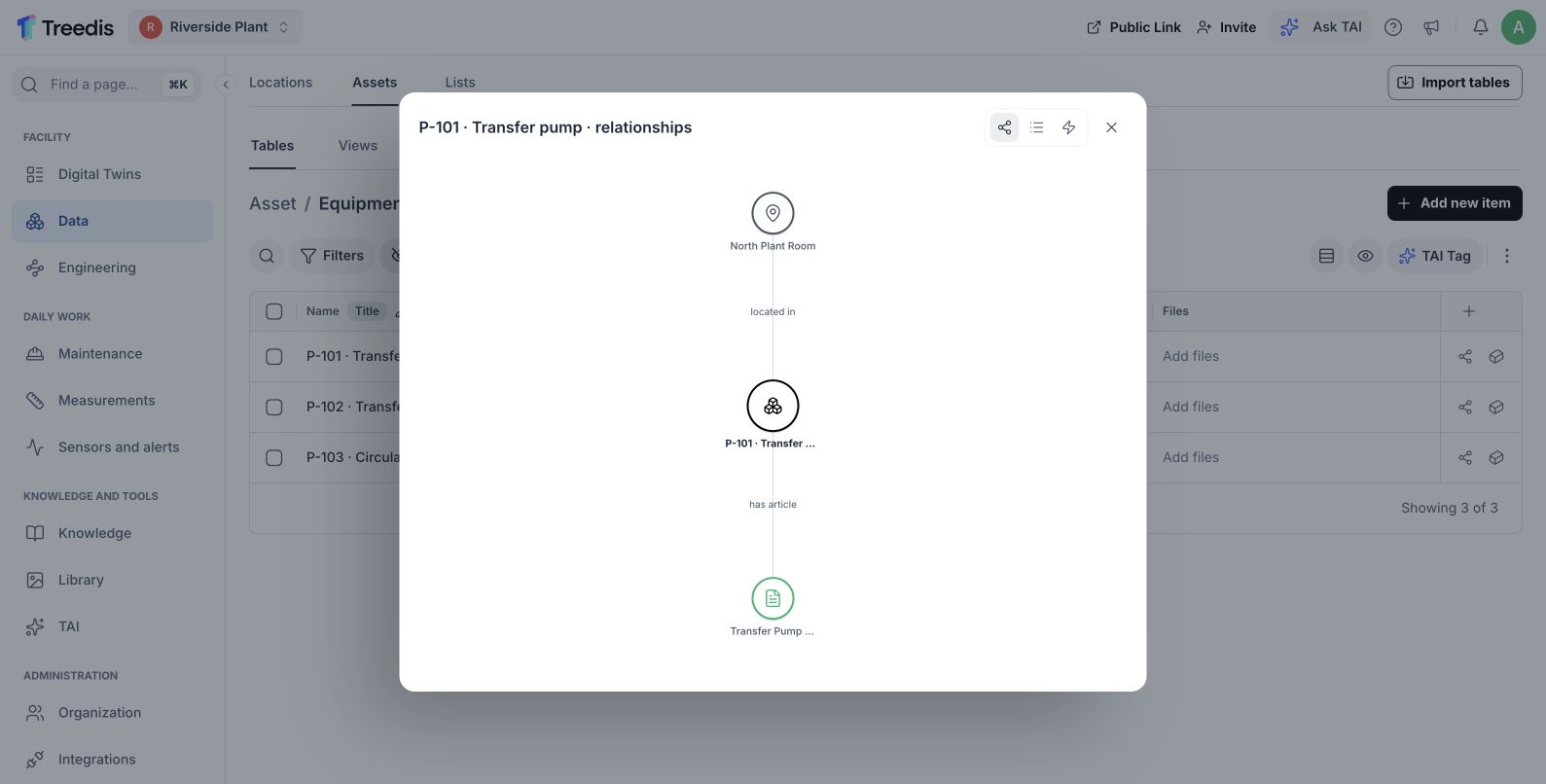
Relationships connect equipment to related information. Open the image to view the controls at full size.
The user flow
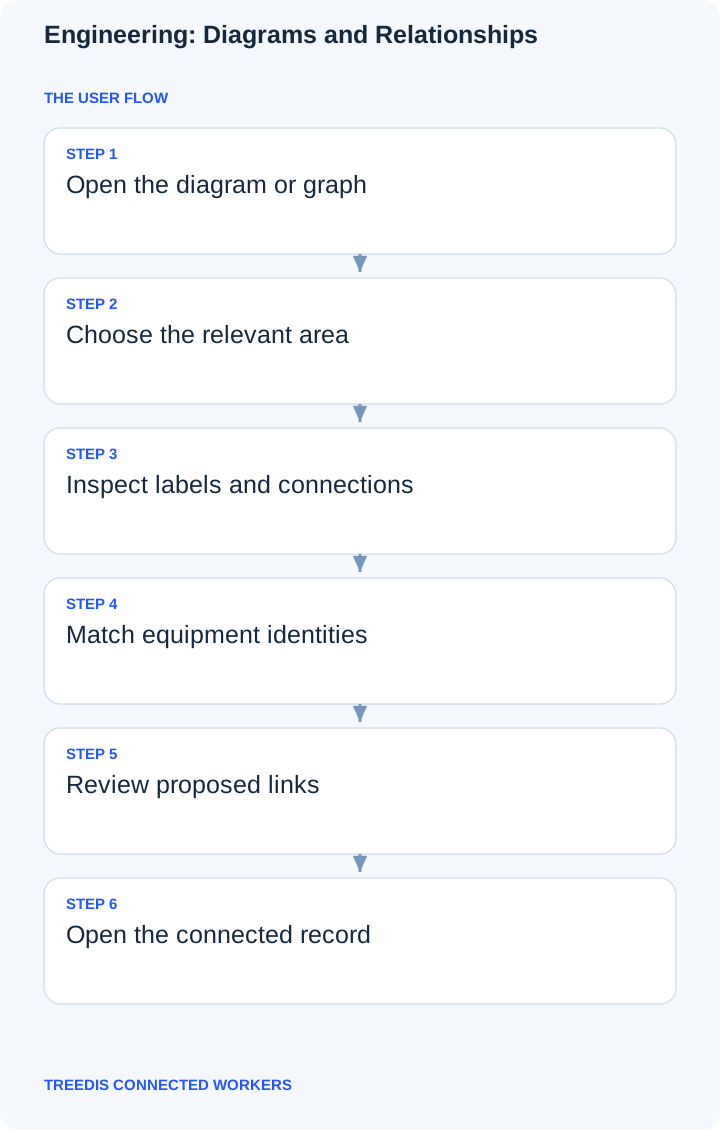
- Open the diagram or graph.
- Choose the relevant area.
- Inspect labels and connections.
- Match equipment identities.
- Review proposed links.
- Open the connected record.
How the information moves
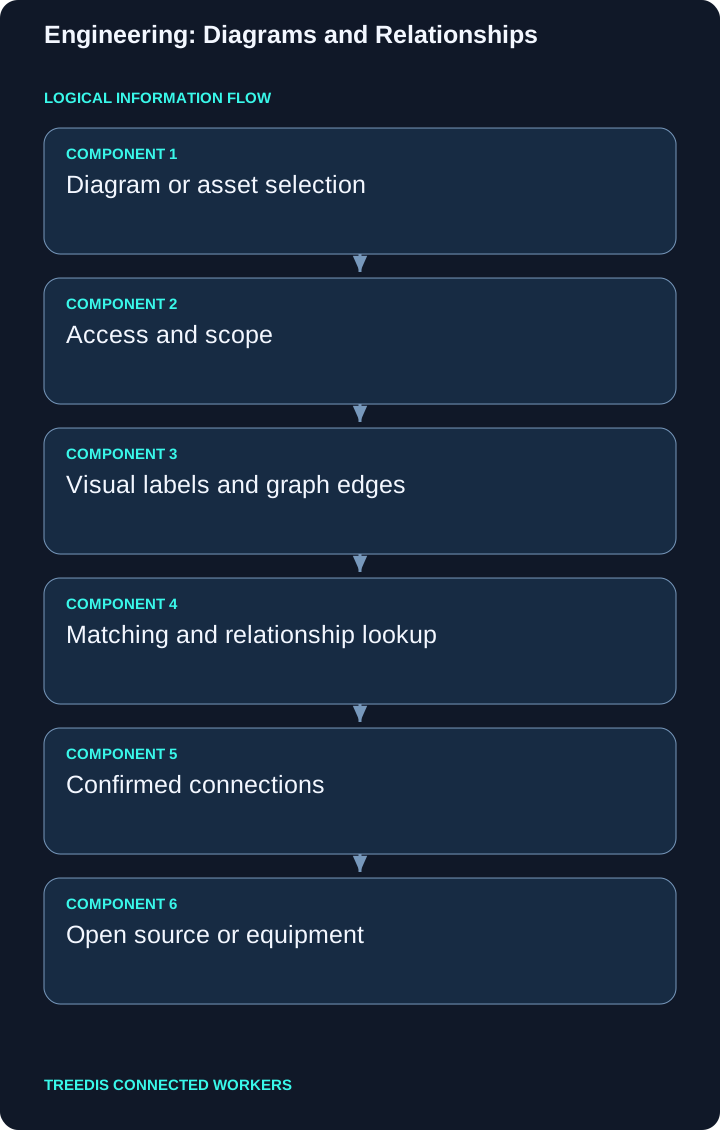
| Stage | Responsibility |
|---|---|
| 1 | Diagram or asset selection |
| 2 | Access and scope |
| 3 | Visual labels and graph edges |
| 4 | Matching and relationship lookup |
| 5 | Confirmed connections |
| 6 | Open source or equipment |
The diagram describes the logical path through the application. Saved records retain their workspace and relationships. Supported background processing and external synchronization can complete after the initial save.
Tips for better data and TAI context
- Use readable, current diagram revisions.
- Keep asset codes consistent with drawing labels.
- Resolve repeated identifiers using location and system context.
Consistent equipment codes, precise location links and readable approved files help TAI retrieve the intended context. A saved record does not mean every attached file has finished indexing. See background indexing for the preparation process.
Check the result
Open the saved record or configuration again. Check its location, equipment links, status and visibility for the intended role. If information is missing, check scope and permissions before adding a duplicate.
Related guides
Connected Workers overview · TAI · Knowledge and search
For help with availability or setup, contact your workspace administrator or support@treedis.com.